Advanced Time-Resolved Photoluminescence Characterization for Semiconductor Research
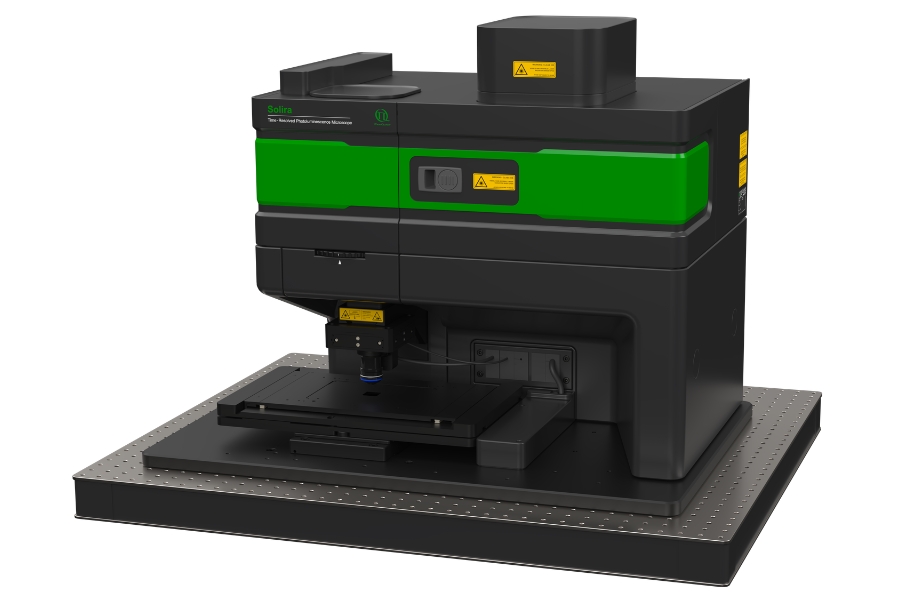
The SoliRA Time-Resolved Photoluminescence Microscope from PicoQuant is a powerful microscopy platform designed for the characterization of semiconductor materials and devices through time-resolved photoluminescence (TRPL) measurements.
Combining high-resolution microscopy with advanced photon counting technology, SoliRA enables researchers to investigate carrier dynamics, recombination processes, material quality, and device performance with exceptional sensitivity and temporal resolution.
Unmatched Flexibility Across Materials and Methods
Solira combines unmatched flexibility across materials and methods in one system that reduces time, space, and experimental complexity. As a time-resolved photoluminescence microscope, it brings together multiple characterization approaches such as steady-state PL, TRPL imaging, and carrier diffusion imaging, enabling direct insight into charge carrier dynamics, recombination pathways, and emission processes across semiconductors, nanomaterials, and optoelectronic devices such as solar cells and LEDs. Flexible excitation and detection configurations adapt to varying sample properties, geometries, and signal conditions, while the upright microscope architecture supports a broad range of sample sizes and scanning approaches. By integrating spatial and temporal information within a single workflow, and enabling spectral analysis through optional coupling solutions, Solira delivers consistent, reproducible results that directly link microscopic processes to macroscopic device performance.
Different materials require optimized excitation conditions to reveal relevant photophysical processes. Solira supports flexible excitation configurations with up to 8 laser channels covering wavelengths from 355 nm to 1064 nm, enabling tailored measurements across semiconductors, nanomaterials, optoelectronic devices, and wavelength-dependent photoluminescence workflows.
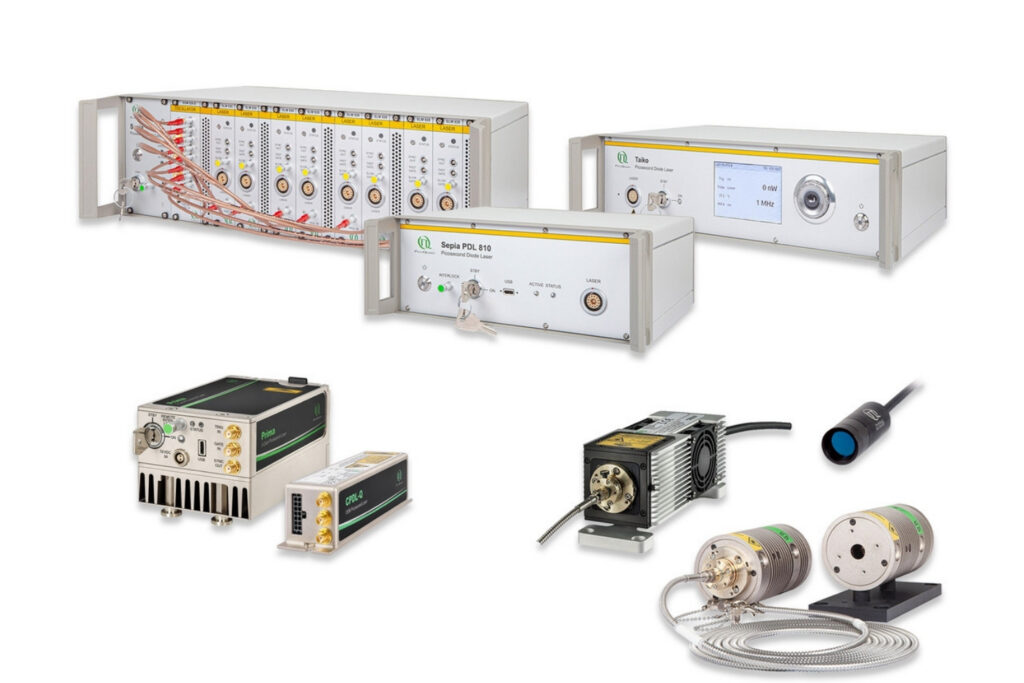 PicoQuant’s broad portfolio of pulsed lasers and LEDs covering deep UV to NIR wavelengths, designed for advanced time-resolved
Understanding advanced materials requires reliable access to weak emission signals and subtle photophysical processes. Solira supports flexible detector configurations with up to 12 detection channels and spectral sensitivity from 400 nm to 1550 nm, enabling robust characterization of low quantum yield materials, single emitters, and demanding experimental conditions.
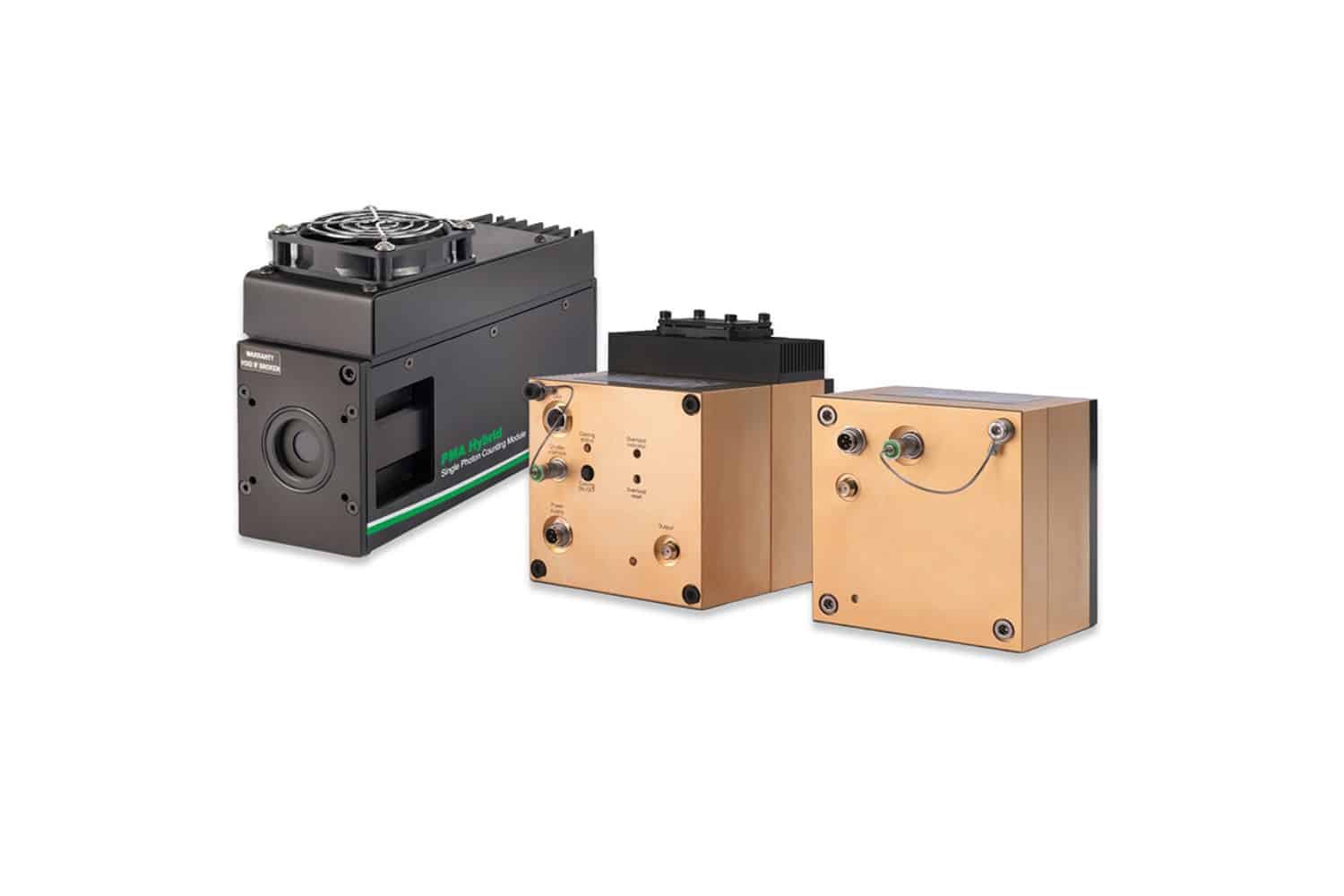 PicoQuant’s high-performance single-photon detectors including hybrid photodetectors and SPAD-based modules for TCSPC, FLIM, FCS, and time-resolved photoluminescence applications.
PicoQuant’s proven TCSPC and time-tagging electronics provide picosecond timing precision for accurate time-resolved measurement and analysis. This enables detailed investigation of carrier dynamics, recombination pathways, and ultrafast photophysical processes across advanced material systems.
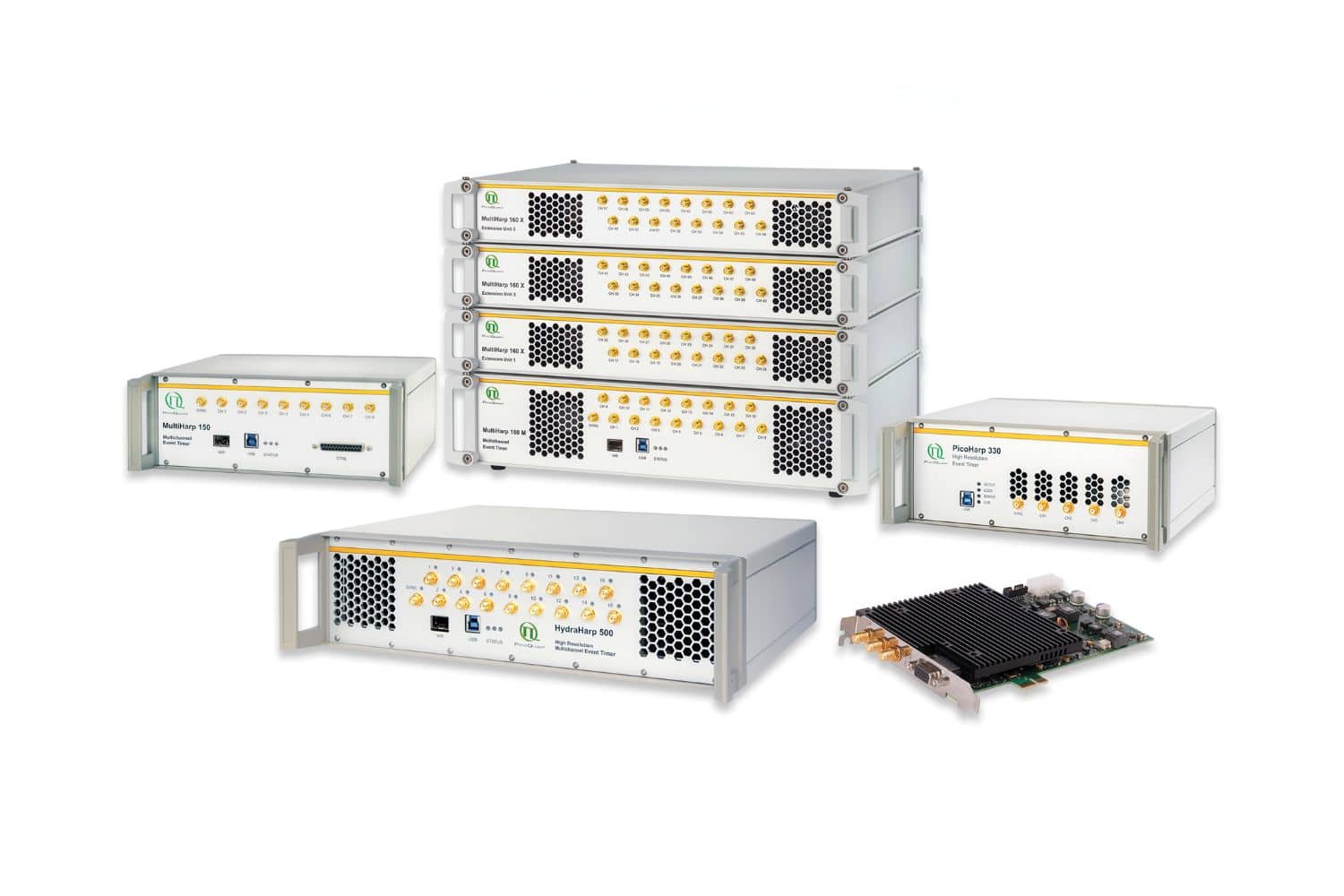 PicoQuant time tagging and TCSPC electronics for high-precision photon timing applications.
Solira’s dedicated software environment supports flexible data acquisition, automation, and advanced analysis across different measurement modes. Context-based workflows enable streamlined acquisition and evaluation for steady-state PL, TRPL imaging, carrier diffusion imaging, anisotropy imaging, time-trace analysis, and g(2) experiments within a unified interface. Real-time visualization and programmable workflows ensure efficient handling of complex experiments while maintaining reproducibility.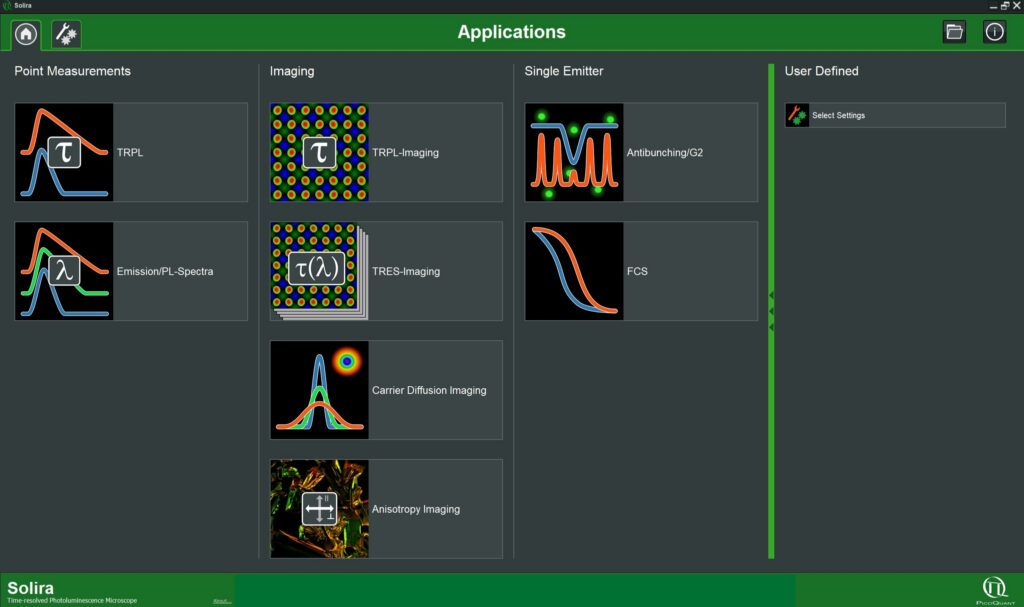
Solira’s software interface provides context-based workflows for steady-state PL, TRPL imaging, carrier diffusion imaging, TRES, and single-emitter analysis within a unified environment.
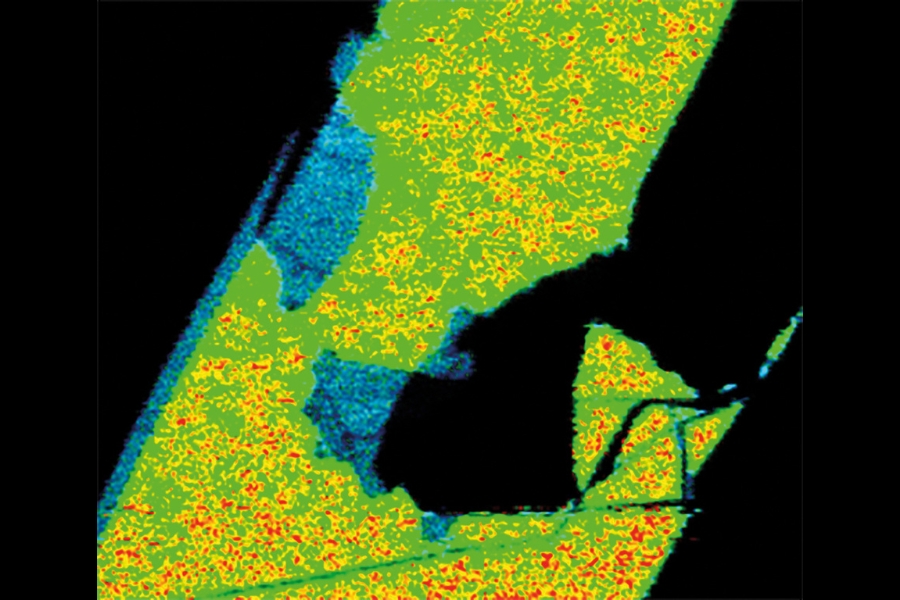
Laser patterning in perovskite solar mini modules can strongly influence local charge carrier dynamics and photoluminescence behavior. In a recent application study, Solira combined spatial localization, spectral characterization, and time-resolved photoluminescence imaging to investigate structured regions with high precision. The results revealed measurable photoluminescence within laser-patterned areas, demonstrating that local material properties are modified rather than fully removed during processing. This workflow highlights how Solira enables spatially resolved insight into semiconductor devices by linking photophysical changes directly to material structure and device performance.
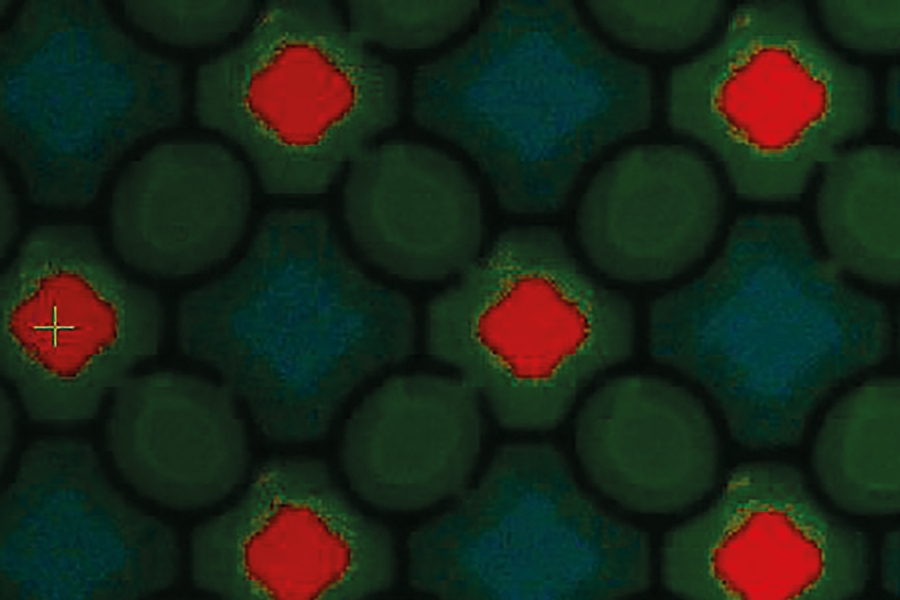
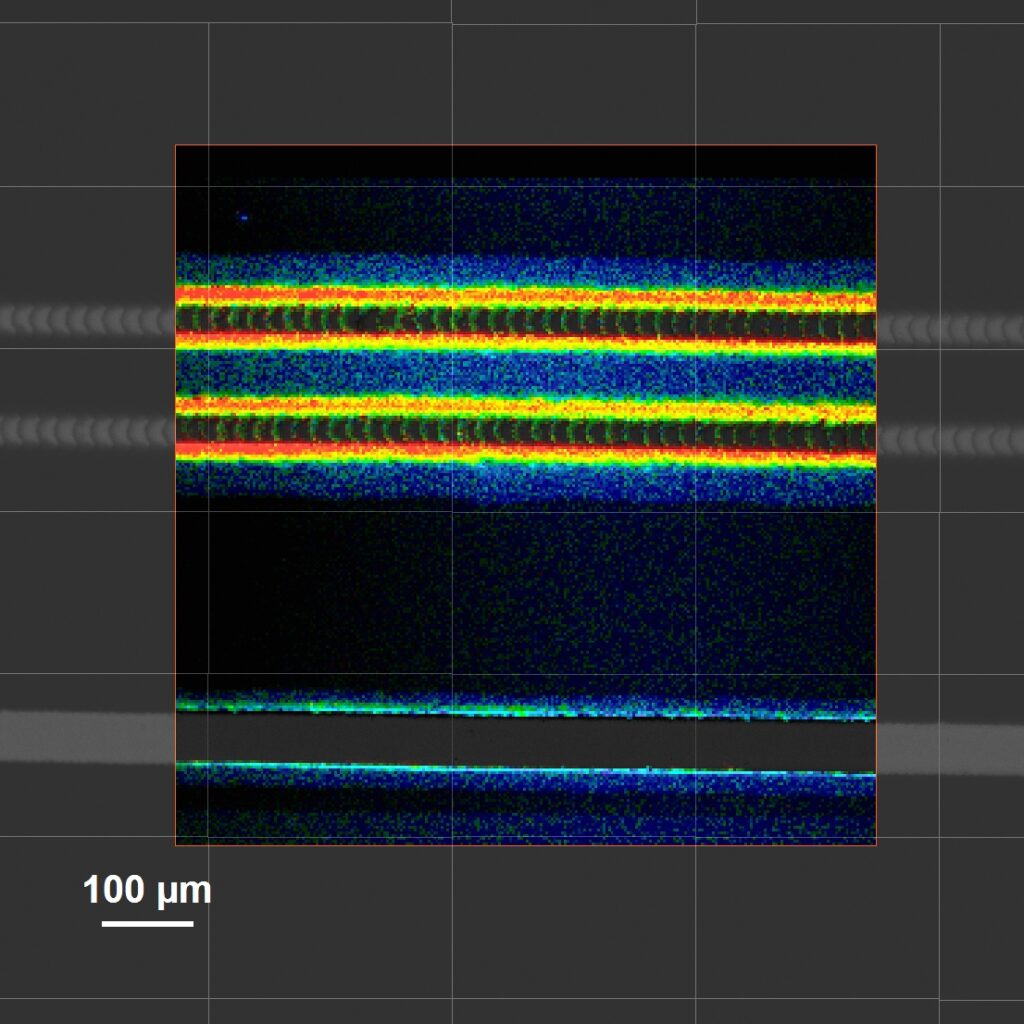 Spatially resolved TRPL image recorded from sample B, showing photoluminescence intensity distribution along laser-patterned lines. The structured regions remain photoluminescent, indicating that the laser process modifies local photophysical properties rather than completely removing the emissive material.
 Capture Weak Signals With Confidence
 Efficient and Reproducible Workflows
 Flexible Configurations for Luminescent Material