Microscope System for ICSI – Eclipse Ti2-U IVF

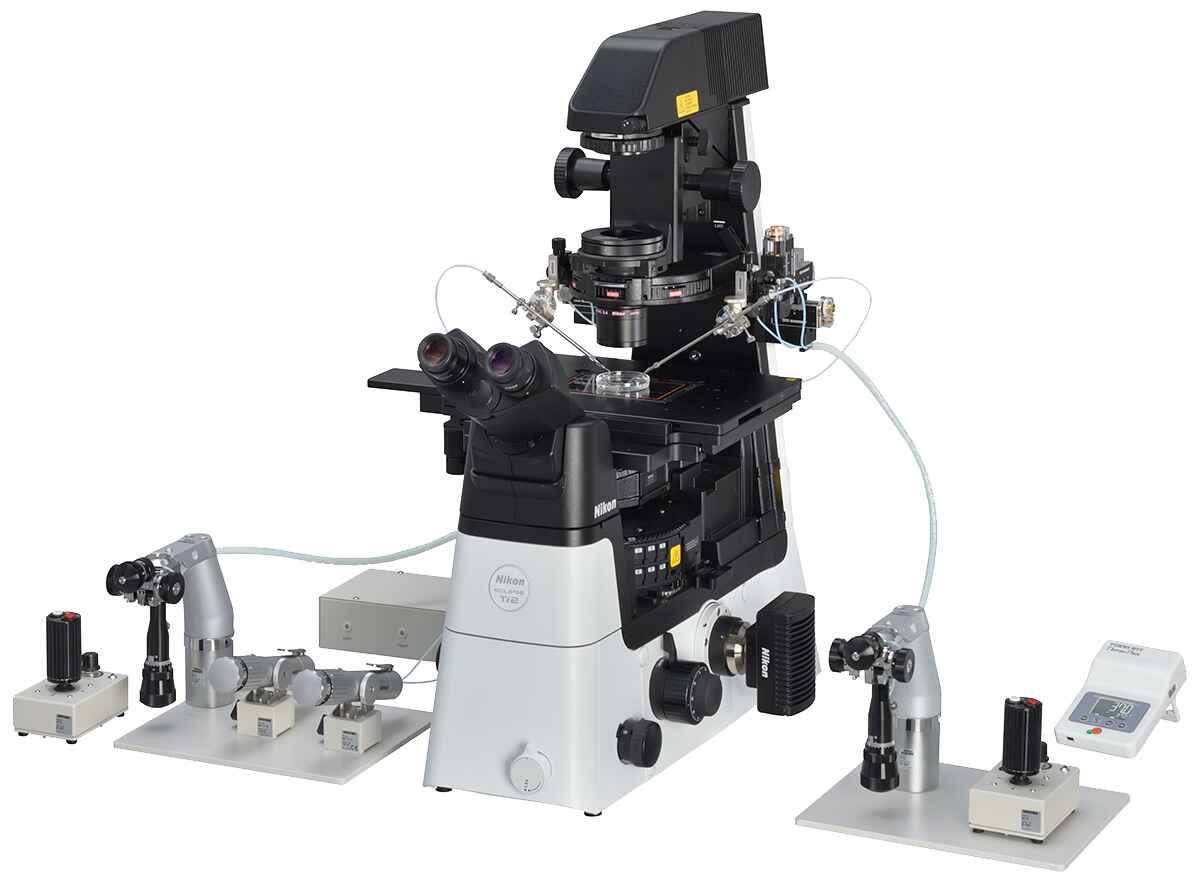
Superior optical performance and precision for ICSI

Nikon microscopes have played a significant role from the early days of Intracytoplasmic Sperm Injection (ICSI) and continue to contribute to the advancement of this field through superior optical performance and precision.

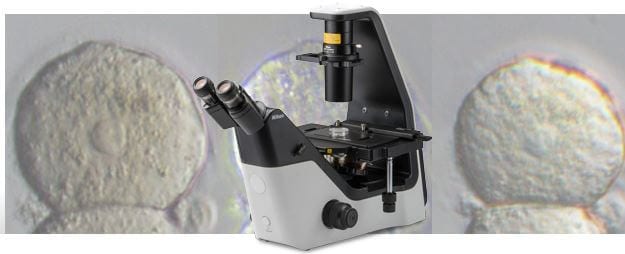
The ECLIPSE Ti2-U IVF provides an ultra-stable platform for performing precision manipulation procedures such as ICSI. The intermediate magnification switching function (1.5X) allows easy switching of observation magnifications without changing objectives.

Super-Resolution Microscope N-STORM

Tenfold increased resolution in x, y and z.

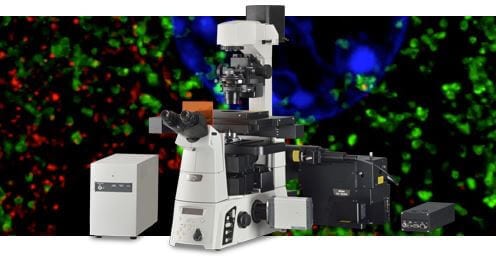
STochastic Optical Reconstruction Microscopy (STORM) reconstructs a super-resolution fluorescence image by combining precise localization information for individual fluorophores in complex fluorescent specimens. N-STORM takes advantage of Nikon’s powerful Ti2-E inverted microscope and applies high-accuracy, multi-color localization and reconstruction in three dimensions (xyz) to enable super-resolution imaging at tenfold the resolution of conventional light microscopes (up to approximately 20 nm in xy).

This powerful technology enables the visualization of molecular interactions at the nanoscopic level, opening up new worlds of scientific understanding.

Super-Resolution Microscope N-SIM E

All-new personal structured illumination super-resolution system for the individual lab.

Introducing an all-new super-resolution system for the individual lab. Achieve 2x resolution at half the price!
Utilizing structured illumination microscopy (SIM) technology, the all-new N-SIM E realizes double the spatial resolution of conventional optical microscopes (to approximately 115 nm). N-SIM E is a streamlined, affordable super-resolution system supporting only essential, commonly used excitation wavelengths and imaging modes, making it an obvious choice for individual labs.

PicoQuant Time-resovled Confocal Fluorescence Microscope – MT200

Time-resolved Confocal Fluorescence Microscope with Unique Single Molecule Sensitivity

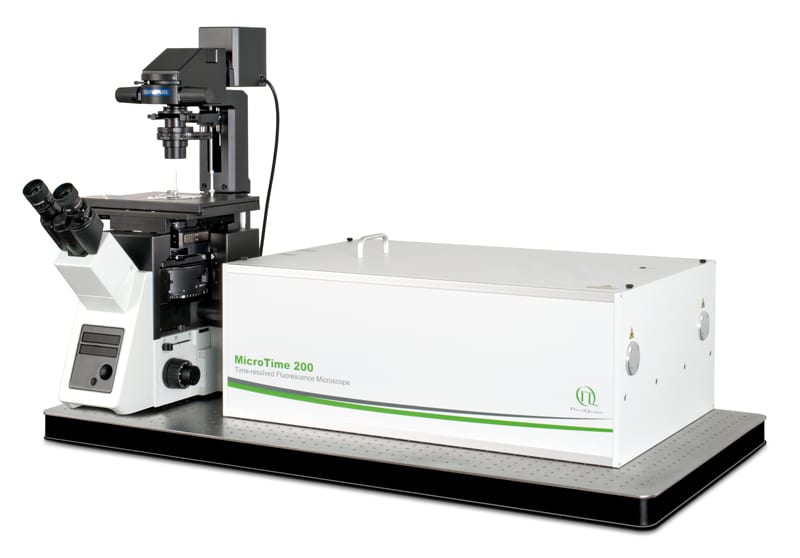
Picoquant Time-resolved Confocal Fluorescence Microscope – MicroTime 200

  • Complete confocal system with laser combining unit, inverted microscope body and multichannel detection unit
  • Turn-key diode lasers for multicolor excitation from 375 to 900 nm
  • Up to 4 truly parallel detection channels using application-optimized detection with SPADs, PMTs or Hybrid-PMTs
  • Time-Correlated-Single Photon Counting (TCSPC) and TTTR mode for investigation of fast dynamics in FCS and FLIM
  • Piezo scanning for 2D- and 3D-lifetime imaging and accurate point positioning
  • Two optional exit ports for additional hardware, e.g. spectrographs
  • Advanced easy-to-use data acquisition, analysis and visualisation software SymPhoTime 64
  • Unique upgrades to 2focus FCS, simultaneous AFM/FLIM, UV measurements
  • STED add-on for super-resolution imaging 

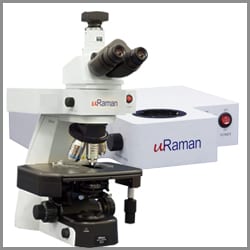
TechnoSpex – uRaman-Modules

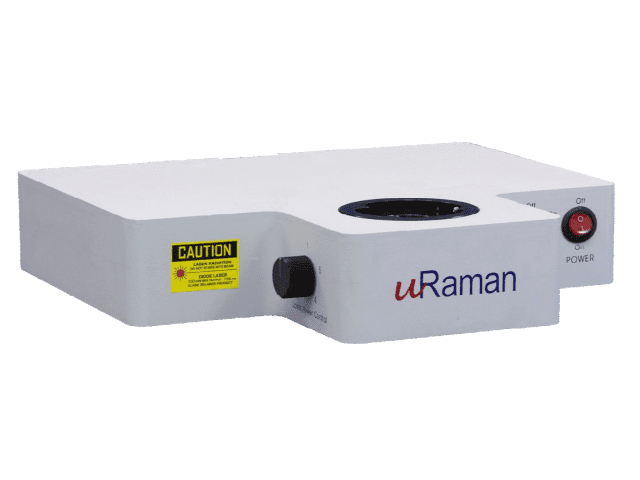
The uRaman-Module can be easily integrated in most major brands upright microscope (Nikon, Olympus, Leica, and Carl Zeiss).

The uRaman is the state-of-the-art flexible Raman spectroscopy system. It offers high performance, ease of use and yet remains cost effective for tight budget users.
The uRaman-Module can be easily integrated with most upright microscopes from the following brands: Nikon, Olympus, Leica, Carl Zeiss, etc. It can also possible to integrate with existing imaging setup, such as fluorescence microscopy, without affecting overall microscopy performance. Multiple modules, stackable to achieve dual or triple wavelength measurement.

Integrated with a 532nm, 633nm or 785nm laser and a high sensitivity linear array detector, the module includes power attenuators, laser safety interlock and user friendly software.
Check with our Application Scientist for compability of your microscope.

TechnoSpex – uRaman-Ci Raman Micro-Spectroscopy System

The uRaman Ci is a complete Raman Micro-Spectroscopy System that comes with the Nikon Ci-L research grade upright microscope.

The uRaman-Ci is a complete Raman Micro-Spectroscopy System that consists of the uRaman module being integrated with the Nikon Ci-L research grade upright microscope.
In addition to Raman and bright field microscopy, the uRaman-Ci can also be equipped with other multimodality imaging capabilities such as reflected bright field, dark field, DIC, polarization and fluorescence imaging. We also have a full range of Nikon Objective Lens and accessories such as cuvette holder for measuring liquid samples for you to choose from. uRaman-Ci can also be equipped with a XY motorized stage and uSoft Map software for Raman chemical mapping.

uRaman-Ci can also be equipped with a XY motorized stage and uSoft Map software for Raman chemical mapping.

Request a quote to know Raman microscope price.

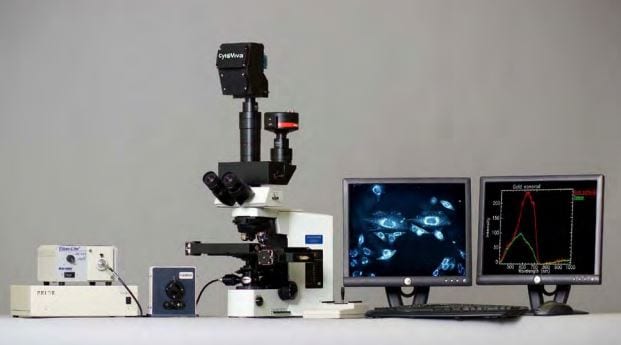
Cytoviva Hyperspectral Microscopy

Cytoviva Hyperspectral Microscopy – Visible Near Infrared (VNIR) and Short Wave Infrared (SWIR)

CytoViva’s Hyperspectral Imaging technology was specifically designed to provide quantitative spectral analysis of nanoscale materials imaged with the patented CytoViva darkfield-based microscope system or with other microscopy modalities

This can include spectral analysis of both biological and materials-based nanoscale samples, which may be isolated or integrated in cells, tissue or other materials-based matrices. CytoViva provides hyperspectral imaging in the visible near-infrared (VNIR 400nm-1,000nm) wavelength ranges as well as in the short wave infrared (SWIR 900nm-1,700nm) wavelength ranges.

In addition, CytoViva provides hyperspectral imaging in both wavelength ranges for macro-level samples that do not require microscopy level analysis.


Hyperspectral images appear very similar to a traditional optical image with one important difference. When observed via image analysis software, each pixel of a hyperspectral image provides the complete spectral response of that pixel’s spatial area within the VNIR or SWIR spectral range. At 100x magnification, a hyperspectral image may contain as many as 700,000 pixels as small as 128nm each. This spectral data is recorded at approximately 2nm of spectral resolution in the VNIR range, enabling minute spectral differences to be measured from pixel to pixel within the image.

Using CytoViva’s proprietary hyperspectral image analysis software, it is possible to identify, locate and map nano-scale materials within a sample based on the unique spectral response of this material. This can be accomplished without any special staining or tagging of the target material, as is often required with traditional microscopy techniques. In addition, when functional groups are added onto or into a nano-scale sample, they can often be identified, as this change in the sample’s surface chemistry will be spectrally detected.

The primary components of CytoViva’s Hyperspectral Imaging technology include a transmission diffraction grating spectrograph and an integrated camera. These components are mounted onto the camera (C) mount of the microscope. A hyperspectral image is created in a line scan or “pushbroom” fashion, by moving the sample across the field of view of the microscope and spectrograph via an automated translational microscope stage. Typically these spectral images are created in seconds or minutes, depending on the required exposure. The hyperspectral imaging hardware is integrated with customized image analysis software. This proprietary software provides the ability to compare spectra within a sample image or between images. It can also build a spectral library of unique samples elements. Using this spectral library, these sample elements can then be mapped in subsequent samples.

To learn more about the research applications supported by CytoViva’s Hyperspectral Microscopy System, please click on the hyperspectral applications page above.

Cytoviva Enhanced Darkfield Illumination System

The CytoViva® Microscope System – Advanced Darkfield Illumination System

Advanced Darkfield Illumination System


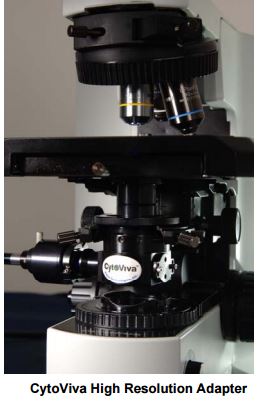
The CytoViva advanced darkfield illumination system replaces the standard microscope condenser. The specialized illuminator focuses fixed-geometry, highly collimated light at oblique angles on the sample. This serves to dramatically improve contrast and signal-to-noise ratio which allows for optimized resolving power and detection capability of non-fluorescing samples.

cytoviva high resolution adaptor

Cytoviva 3D Enhanced Darkfield Imaging System

The CytoViva 3D Enhanced Darkfield Imaging System

The CytoViva 3D Enhanced Darkfield Imaging System provides a method for locating non-labeled nanostructures (particles, tubes, etc.) in a variety of translucent matrices (cells, tissue, organisms). This technique leverages the high signal-to-noise optical performance of the patented CytoViva Enhanced Darkfield Microscope Technology in combination with patent-pending deconvolution and particle location routines to provide users with a three dimensional optical model of their sample. Most importantly, this technique does not require the use of fluorescent labels on the nanoparticles to obtain an image of the particles, thus removing the potentially negative influence of these labels on the sample.

homer-head-and-cnts-1024x699.jpg

The 3D image is created by acquiring and storing a “stack” of equally spaced two dimensional images using the CytoViva Enhanced Darkfield Microscope Technology, a piezo-driven Z-axis stage and CytoViva’s proprietary image acquisition and control software.  This stack of images is then processed using CytoViva 3D Image Analysis ImageJ plug-ins to locate the subject particles, as well as, deconvolve the surrounding cells, tissue or other translucent matrix.  The resulting optical image is then viewed in an ImageJ 3D viewer.  The use of ImageJ also allows further processing of the data in an environment familiar to many users.

The images above  illustrate three examples of  the 3D capability.  Figure 1 is a 3D deconvolution  of nanoparticles  (NPs) in a cell with the NPs in red, the nuclear structure in blue and the  cell structure in gray. Figure 2  is a 3D deconvolution of a carbon nanotube piercing a tissue section.

The CytoViva 3D Enhanced Darkfield Imaging System is designed to facilitate research in a variety of applications in nanobiology (targeted drug delivery and pathogen detection), nanotoxicology (nanoparticles and carbon nanotubes in tissue), and others where it is useful to understand the location of nanostructures in a three dimensional space.  This capability is fully compatible with CytoViva’s Hyperspectral Imaging system and can be operated on the same microscope platform, thus allowing existing systems to be easily upgraded to include this capability.

3D Videos:

Unlabeled Au Nanoparticles in a Cell

Unlabeled Carbon Nanotubes Embedded in Tissue

Fiber Matrix

PicoQuant Fluorescence Lifetime Spectrometer – FluoTime 250

The FluoTime 250 is a compact table-top though flexible lifetime fluorometer for life science, materials science, and photochemistry applications. This setup enables users to carry out routine lab work quickly, reliably and with high precision. Our fully automated setup contains the complete optics and electronics for recording fluorescence and photoluminescence decays by means of Time-Correlated Single Photon Counting (TCSPC) or Multichannel Scaling (MCS) from a few picoseconds to several seconds. FluoTime 250 is filter-based though it can be equipped with an additional monochromator for UV-Vis spectral range. This fluorescence spectrometer offers high spectral and temporal resolution that allow the acquisition and analysis of

FluoTime 250 is designed to be equipped with PicoQuant picosecond pulsed light sources. All components are being controlled by EasyTau 2 software. A unique feature of PicoQuant spectroscopy software are its three operation modes:

  • Wizard mode provides step by step assistance
  • Customized mode enables full control over the instrumental parameters
  • Scripting mode allows automation of measurement routines.

The latest version of the software, EasyTau 2.3, supports the integration of Prima and Taiko PDL M1.

FluoTime 250 - Fully automated lifetime spectrometer with high performance optics